


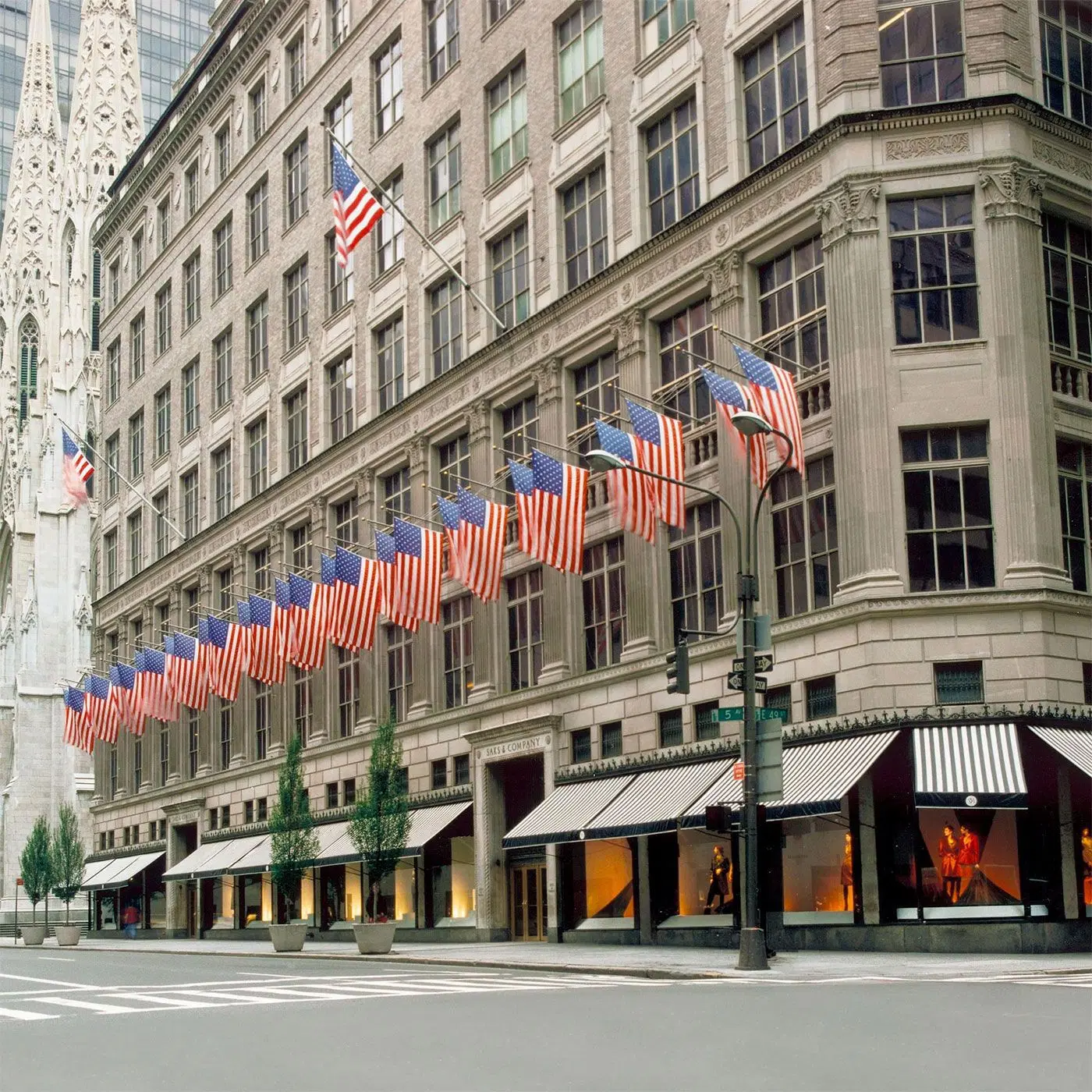
Saks has filed for bankruptcy, a development that signals just how dramatically the retail landscape is shifting, even at the top end of the market. Known for its legacy positioning in American luxury, the move is being watched closely by designers, investors, and consumers alike, not only for what it means for Saks itself, but for what it reflects about the wider health of the department store model.
In a sector built on perception, prestige, and permanence, bankruptcy is not just a financial decision. It is a cultural one. It forces the industry to confront a new reality where the traditional rules of luxury retail no longer hold the same weight.
Why Saks Has Filed for Bankruptcy
While the full details of the filing will be shaped by court proceedings and restructuring negotiations, the context is familiar to anyone tracking luxury retail over the last few years. Consumers have become more cautious. Inflation has reshaped spending habits. Footfall has not returned to pre-pandemic levels in the same way it once did. Online shopping has matured into a default behaviour rather than a convenience.
This is not simply about reduced spending. It is about changed priorities.
Luxury shoppers are still buying, but they are doing so differently. They are increasingly choosing experiences, travel, and smaller, more curated purchases. Shoppers have also become more intentional with brand choices, looking for exclusivity, strong storytelling, and pieces that feel personal rather than mass stocked.
For a traditional department store, that is an identity challenge, not only a commercial one.
The Department Store Model Has Been Under Pressure for Years
Saks’ bankruptcy filing does not exist in isolation. Department stores globally have been fighting a slow erosion of their influence for over a decade. Once positioned as the gateway to luxury, the department store has had to compete with brands who now control their own sales funnels and their own consumer relationships.
Direct-to-consumer is no longer the alternative route. It is the priority.
Luxury brands have invested in their own boutiques, their own online platforms, and their own clienteling strategies. That shift has reduced dependency on multi-brand retail, especially when wholesale terms, markdown culture, and delayed payments have become consistent pain points across the industry.
The department store is still relevant, but the power balance has changed.
What This Means for Luxury Brands and Designers
For designers and luxury brands, Saks’ bankruptcy introduces immediate concerns and wider industry questions.
The first is stock. If a retailer restructures, buying patterns can change quickly. Brands may see reduced orders, delayed purchases, or a sharper focus on commercially safe categories.
The second is payment risk. When retailers enter financial reorganisation, brands often pay closer attention to timelines, invoicing structures, and exposure. Smaller designers can be disproportionately affected, particularly those relying on wholesale partnerships to support cashflow.
The third is positioning. Saks has long served as a stamp of credibility, especially for brands aiming to build status within the American luxury market. If that platform weakens, brands will increasingly rely on alternative prestige signals, such as celebrity placement, strategic brand partnerships, high-performing digital channels, and curated pop-up activations.
The fashion industry has always been about access. Now, access is being rebuilt in new forms.
The Real Problem: Consumers Want Curated, Not Crowded
The modern luxury customer is not short of choice. If anything, they are exhausted by it.
Luxury retail is shifting towards editing rather than abundance. A strong store today is not the one that stocks the most brands. It is the one that communicates taste and identity with precision.
Consumers want to walk into a space and feel a point of view. They want service that feels human and informed. They want collections that feel deliberate. They are not searching for quantity. They are searching for confidence.
This is where department stores have struggled. When everything is available, nothing feels special.
Luxury Retail Is Being Redefined by Experience
The future of luxury retail is not purely transactional. It is experiential.
The success of modern luxury retail depends on the emotional feeling of the brand world, not just the product. Whether it is a private appointment, a fashion week partnership, a personalised styling session, or a beautifully executed store environment, luxury is becoming more about how a customer feels in the process of buying.
This is what gives direct-to-consumer brands such power. They are building ecosystems, not just selling items.
For Saks, the bankruptcy filing highlights how urgent that evolution has become. It is not enough to sell luxury. A retailer must stage it.
What Happens Next for Saks
A bankruptcy filing does not always mean collapse. Often, it is a strategic restructuring that enables a company to renegotiate debt, reassess costs, and rebuild a business in a way that is sustainable.
The key question is whether Saks will use this moment to transform, rather than simply survive.
If Saks emerges from this chapter with stronger digital infrastructure, a clearer merchandising strategy, and a sharper identity that reflects what luxury consumers want now, it could become a case study in modern reinvention. If not, it risks becoming another example of a legacy retailer fighting a market that has already moved on.
The Wider Message to the Industry
The real story here is not that luxury is failing. Luxury is adapting.
High-end shoppers still exist. Designer brands are still growing. The appetite for status, beauty, and exceptional craftsmanship remains. But the pathways to that customer have changed.
Saks filing for bankruptcy is a reminder that heritage alone is not a strategy. The luxury retail world is entering an era where relevance must be continuously earned, not inherited.
And for every retailer watching this unfold, the message is clear. The future belongs to those who can offer clarity, intimacy, and desire in a market that no longer rewards traditional dominance.


.jpg)


